Skip to main content
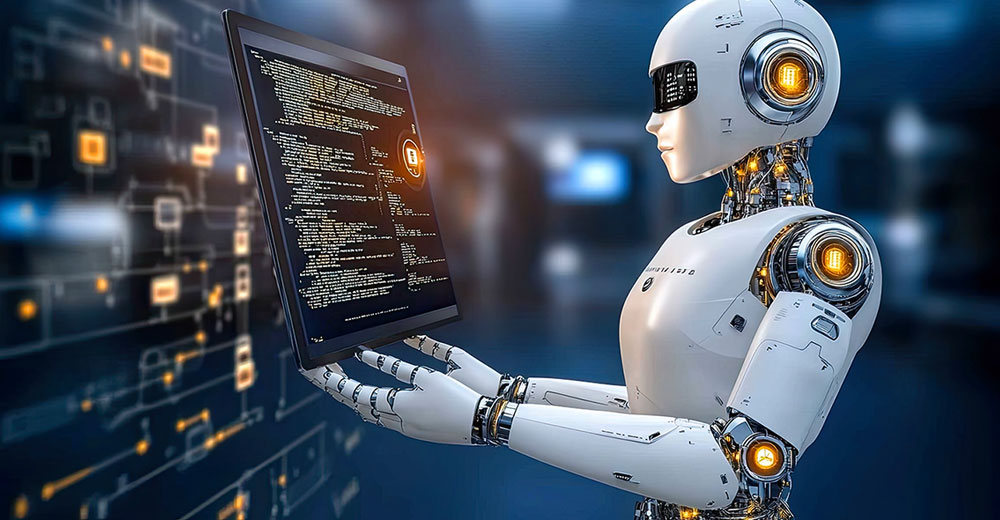
In the high-stakes world of modern tech, the narrative around Artificial Intelligence has shifted. We’ve moved past the dystopian “robots are taking our jobs” headlines of the early 2020s and landed in a much more nuanced reality. As we navigate 2026, the mantra for every professional from junior developers to senior consultants has become: AI will not replace you, but a human using AI definitely will.
The divide is no longer between man and machine; it’s between the augmented professional and the traditionalist.
The Productivity Gap: By the Numbers
The reason this phrase has become so pervasive isn't just rhetoric it’s math. Recent data from the first half of 2026 shows a staggering divide in the workplace. Professionals who have integrated Generative and Agentic AI into their daily workflows aren't just slightly faster; they are operating on a different plane of efficiency.
- Throughput: AI-augmented workers report up to 66% higher throughput than their non-AI counterparts.
- Time Recaptured: The average AI-fluent professional saves approximately 12 hours per week on routine tasks.
- The Skill Premium: Tech job postings requiring AI literacy now pay an average of 28% more than those that don't.
Augmentation Over Automation
The “threat” of AI is often misunderstood as automation (replacing a human), when the real trend is augmentation (enhancing a human). Expert economists at Harvard and Oxford have noted that firms racing to simply “cut headcount” with AI often fail because they “automate the past rather than invent the future.”
The most successful professionals are those who view AI as a force multiplier.
- For the Analyst: AI handles the data cleaning and pattern recognition, while the human provides the strategic “so what?” and ethical oversight.
- For the Developer: AI suggests the boilerplate and debugs common errors, while the human architect focuses on system design and user experience.
- For the Marketer: AI generates 50 variations of a campaign in seconds, while the human chooses the one that truly resonates with the brand's soul.
2026: The Year of the “AI Agent”
We are currently seeing the rise of Agentic AI systems capable of executing complex, multi-step workflows autonomously under human supervision. This isn't just a chatbot that answers questions; it's a digital teammate that can manage a calendar, research a competitor, and draft a project proposal while you sleep.
If you aren't the one “managing” these agents, you are likely the one performing the manual tasks they were designed to eliminate.
How to Be the “Someone” Who Uses AI
You don't need a PhD in Machine Learning to stay relevant, but you do need AI Literacy. Here is how to ensure you stay on the right side of the divide:
- Master Prompt Engineering: Learn to communicate with AI. It’s not about “googling”; it’s about “instruction.” Understanding how to frame context and constraints is the new “coding.”
- Integrate Low-Code Tools: Use tools like Power Automate or Zapier to connect your AI to your data. An AI that can't “do” anything is just a toy; an AI connected to your workflow is a tool.
- Cultivate “Human-Only” Skills: As AI handles the logical and repetitive, skills like empathy, complex negotiation, and ethical judgment become more valuable, not less.
- Stay “Beta”: The tools you use today will be updated by next Tuesday. Adopt a mindset of continuous experimentation.
In conclusion, the goal isn't to beat the AI; it’s to hire it. In 2026, the most secure job is the one held by the person who knows how to orchestrate a symphony of AI tools to deliver results that were previously impossible.
Don't wait for the replacement. Start the augmentation.